
Most of us were raised on the same money advice: work hard, spend less than you earn, keep the rest in the bank. For a good stretch of Australian history, that was genuinely sound advice. It isn’t anymore, not on its own. Inflation has outrun ordinary savings accounts for years now, and the rate war between the big banks and the neobanks doesn’t change much for most people, because most people never get around to switching. Meanwhile, the friend who bought an investment property back in 2015, or tipped a bonus into shares instead of a term deposit, is often years ahead of the disciplined saver who did everything by the book. That’s really the story behind the phrase savers are losers. Saving isn’t the mistake. Treating it as your only strategy, for decades, while everything else in the economy keeps moving, is.
Saving and investing are doing two different jobs
People use the two words as if they’re interchangeable, but they’re not describing the same thing. Saving is about safety. Cash sits in a bank account where it’s protected, you can get to it within a day or two, and it earns a bit of interest along the way. Investing is about growth. You are putting money into something, property, shares, a business, that has a real chance of rising in value over years, and in exchange you give up some certainty and some access to the cash.
A savings account exists to absorb a shock: a car repair, a stretch between jobs, a flight home for a family emergency. An investment exists to build wealth, because it’s tied to something that actually produces value, rent from a tenant, profit from a growing company, a harvest off a farm. Cash sitting on its own produces nothing. Its only real job is to hold its ground against rising prices, and for a while now it hasn’t been winning that fight.
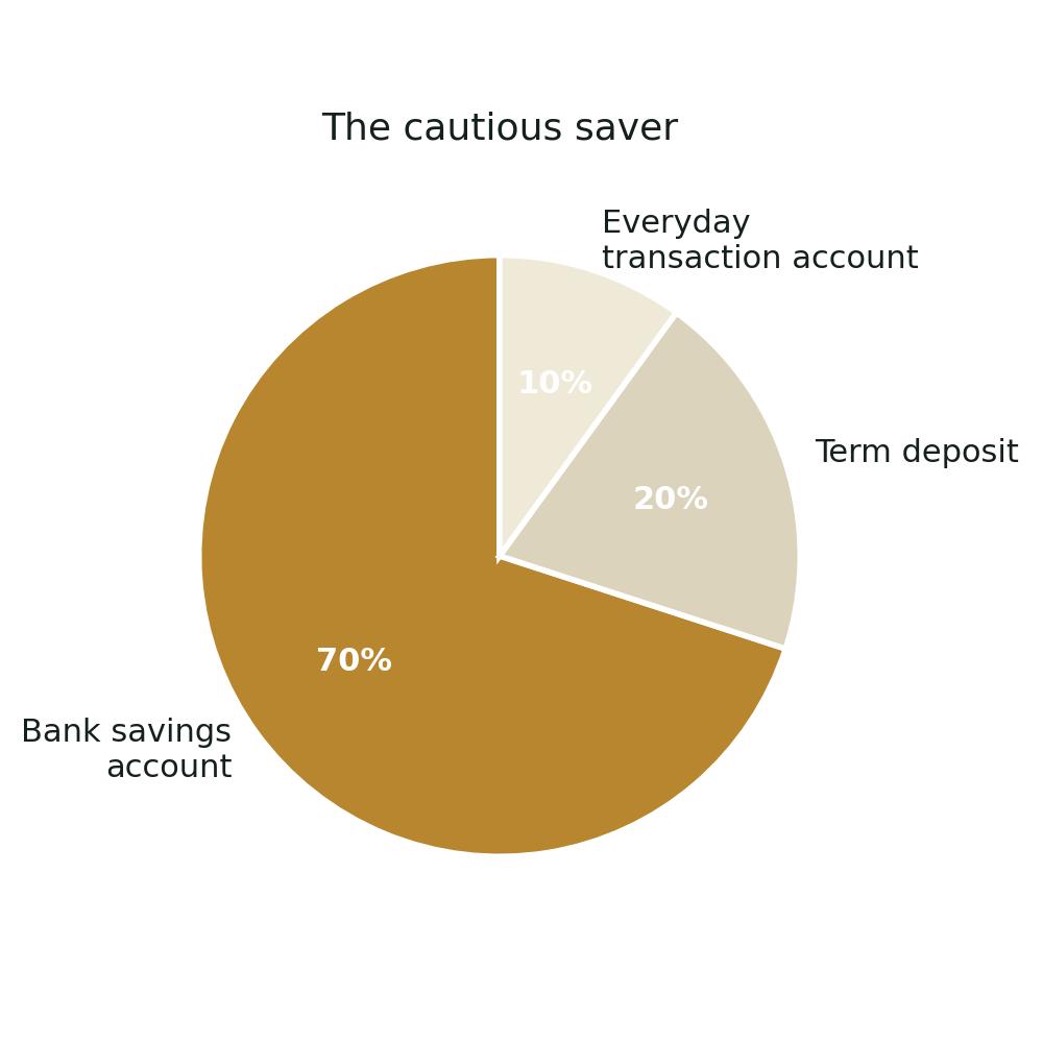
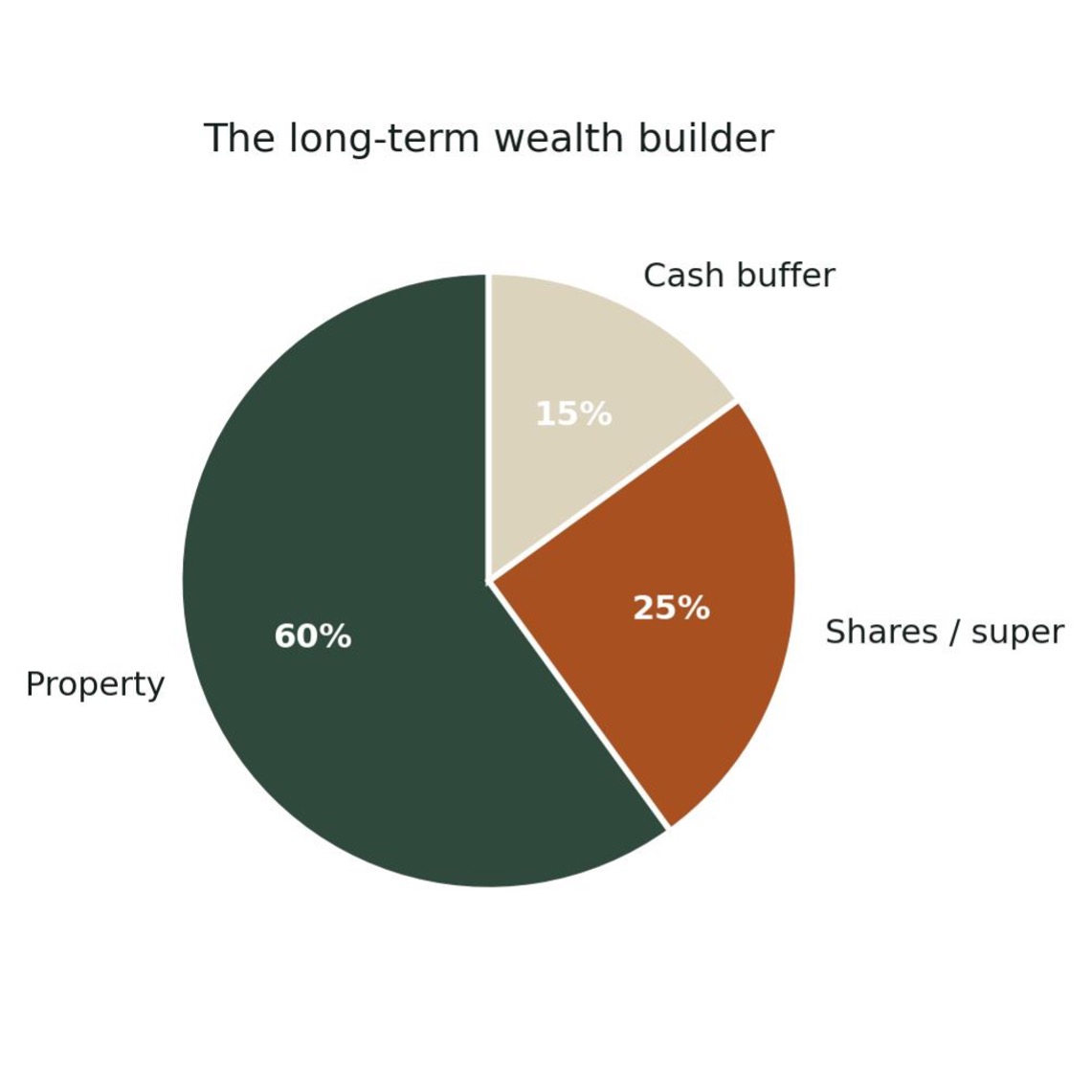
Illustrative allocation, based on common household patterns described in ABS Household Finance data and industry surveys from Mozo and Canstar, 2026.
The gap most people never notice
Through the middle of 2026, the Reserve Bank’s trimmed mean inflation was running at roughly 3.6 to 3.9 per cent a year, with the cash rate held at 4.35 per cent. On the surface, that sounds like savers should be doing fine, since a decent account can beat that. In practice, most people are not in a decent account. The big four banks’ standard, no-strings rate has sat as low as 0.05 to 1.5 per cent, while the flashy 5 to 6 per cent rates advertised everywhere come loaded with conditions: minimum monthly deposits, four-month honeymoon periods, balance caps. Miss one condition and the rate quietly drops back to something close to nothing.
So, the average saver isn’t earning the headline rate. They’re earning whatever their bank pays on the account they opened years ago and haven’t thought about since, while prices keep climbing regardless. That gap, between what inflation takes and what the bank hands back, is where the real damage happens.
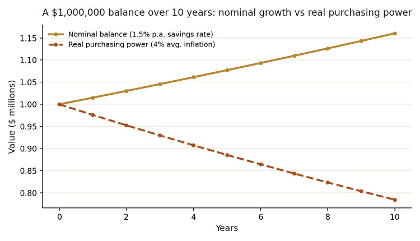
Illustrative projection assuming a 1.5% p.a. standard bank savings rate against 4% average annual inflation, based on RBA cash rate and inflation data and ABS CPI figures, 2026. Actual outcomes depend on the account and the inflation path.
Run the numbers and a million dollars left in an ordinary bank account still shows $1.16 million on the statement after ten years. But in terms of what it can actually buy, it’s worth closer to $780,000. That’s a real loss of more than $200,000, and the account holder never touched the money.
That’s the part that never makes it into the just save more advice. A bank statement shows a bigger number and that feels like progress. But the figure on the page and the value in your pocket aren’t the same thing, and once inflation runs faster than your interest rate, you lose ground every year even while your balance keeps ticking upward.
What happens if the job goes and the skills don’t keep up
There’s a second problem with parking everything in cash: it assumes the income funding that cash will always be there. So far, Australia’s job market has held up better than the doom headlines suggested. The Department of Employment and Workplace Relations found in July 2026 that AI hasn’t caused broad job losses yet, and unemployment was sitting at a low 4.4 per cent in May. But buried in that same report is a warning sign worth reading twice: jobs in occupations exposed to AI, clerical work, admin, data entry, grew by just 5.6 per cent since late 2022, against 9.5 per cent everywhere else. That’s not a crisis. It’s a trend, and trends compound.
McKinsey’s global research puts a number on where that trend is heading: as many as 1.3 million Australians, close to 9 per cent of the workforce, are expected to need to move into different roles by 2030. Australia’s own tech sector actually shrank in headcount during 2025, the first time that’s happened on record.
| 4.4% Australian unemployment, May 2026 | 5.6% vs 9.5% Job growth in AI-exposed roles vs least-exposed roles since late 2022 | ~9% of the workforce projected to need to change roles by 2030 (McKinsey) |
None of this means everyone’s job is about to disappear. It means the ground shifts a little more each year under certain kinds of work, quietly enough that most people don’t clock it until it’s their turn. A saver whose entire financial life depends on one wage is carrying two risks at once: inflation eating away at the cash sitting in the bank, and the chance that the job funding that cash gets automated, restructured, or simply not renewed. Someone holding assets that earn money on their own, rent, dividends, growth, has a second engine running that doesn’t care whether they show up to the office.
What it looks like when that second engine runs
From $80,000 to a portfolio worth more than $25 million
Bharat Patel, founder of Cashflow Properties Australia, is a good example of what that looks like in practice. He started with $80,000 in savings and built that into a property portfolio he says is now worth more than $25 million. What matters isn’t the headline number, it’s what that portfolio does without him lifting a finger. If it grows at an average of 7 to 10 per cent a year, roughly in line with long-run Australian property growth over multi-decade periods, that works out to somewhere between $1.75 million and $2.5 million a year in capital growth alone.
Property markets go down as well as up. Cotality data shows national dwelling values fell 0.7 per cent in July 2026 alone, the sharpest monthly drop since 2022, with declines across more than three-quarters of capital city suburbs over the prior three months. Building a portfolio that size usually involves borrowing, reinvesting, and years of decisions along the way, and it carries real risk alongside the upside. What worked for one portfolio in one market over one period comes with no guarantee for anyone else.