
For decades, owning a detached house has been considered the ultimate property investment strategy in Australia. The belief that land appreciates faster than any other asset has encouraged investors to stretch their finances in pursuit of standalone homes. While this strategy delivered impressive results during the post-pandemic boom, the market dynamics in 2026 tell a very different story.
Between 2021 and 2025, Australian house prices surged across most capital cities and regional centres. According to research studies, national dwelling values increased by approximately 48 percent over the five-year period, with cities like Perth, Adelaide and Brisbane recording some of the strongest growth. As a result, affordability has deteriorated significantly, pushing detached houses beyond the reach of many investors. Today, Australia’s median home price sits at more than eight times the median household income, making it increasingly difficult for first-time and even experienced investors to enter the market.
The challenge for investors is no longer identifying whether houses have performed well. Instead, the focus should be on identifying where the next phase of growth is likely to emerge while preserving cash flow and borrowing power.
The Rising Cost of Owning a House
The biggest drawback of buying a detached house in today’s market is the sheer amount of capital required. High purchase prices translate into larger deposits, bigger mortgages and substantially higher monthly repayments. While these properties may continue to appreciate over the long term, they often place enormous pressure on an investor’s finances.
Beyond mortgage repayments, detached houses also come with significantly higher ongoing expenses. Larger land parcels require more maintenance, including roofing, fencing, gardens, plumbing and structural repairs. Insurance premiums are typically higher because of the increased replacement value of the property, while council rates and general upkeep also contribute to higher holding costs.
For many investors, these expenses reduce the financial flexibility needed to grow a portfolio.
When Negative Gearing Becomes a Burden
Negative gearing has traditionally been viewed as a useful tax strategy, allowing investors to offset property losses against taxable income. However, relying heavily on negative gearing is becoming increasingly risky in today’s economic environment.
Following the Federal Budget announced on 12 May 2026, the spotlight has shifted towards investment strategies that prioritise sustainable cash flow rather than significant annual losses. Although negative gearing continues to offer benefits for many investors, increasing borrowing costs and policy discussions around housing affordability have made highly negatively geared properties less attractive than they once were.
A property that consistently requires large personal financial contributions can eventually become a barrier to building long-term wealth rather than an asset that accelerates it.
Borrowing Capacity Is the Real Wealth Builder
One of the most overlooked aspects of property investing is borrowing capacity. Many investors become so focused on purchasing the biggest property they can afford that they forget their ability to borrow again is equally important.
Banks assess an investor’s ability to service future loans based largely on income, expenses and existing debt commitments. An expensive house with weak rental returns can significantly reduce future borrowing capacity, making it difficult to acquire additional properties.
Building wealth through property is rarely about owning one outstanding asset. It is about creating a portfolio that can continue growing over time through responsible leverage. Protecting borrowing capacity allows investors to use equity strategically and continue expanding their portfolio as opportunities arise.
Why Affordable Townhouses, Villas and Boutique Units Make Sense in 2026
As detached houses become increasingly unaffordable, buyer demand naturally shifts towards the next most accessible property type. Throughout Australia’s property history, affordability has consistently influenced where the next wave of price growth occurs.
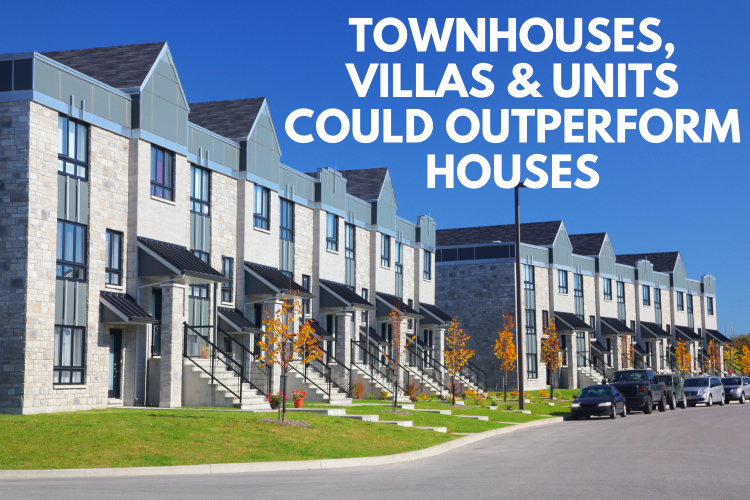
Townhouses, villas and units within smaller boutique complexes are becoming increasingly attractive because they provide many of the lifestyle benefits buyers seek without the premium price tag attached to detached homes. These properties often appeal to first-home buyers, downsizers, young professionals and investors alike, creating a broader buyer pool that supports future demand.
More importantly, investors can often purchase these properties with substantially lower deposits while maintaining healthier cash flow.
Better Cash Flow Creates Better Investment Outcomes
Cash flow remains one of the most important factors in building a sustainable property portfolio. Unlike expensive detached houses that may require ongoing financial support from the owner, affordable villas and townhouses frequently generate stronger rental yields relative to their purchase price.
This improved cash flow offers several advantages. Investors are less reliant on personal income to support repayments, loan serviceability improves, and properties become more resilient during periods of higher interest rates. Positive or near-neutral cash flow also allows investors to retain more disposable income, creating opportunities to save for future purchases or reduce debt faster.
Over the long term, stronger cash flow provides stability, allowing investors to hold properties through different market cycles without experiencing significant financial stress.
Lower Maintenance Means Higher Efficiency
Maintenance is another area where affordable dwellings often outperform detached houses.
A standalone house requires ongoing investment to maintain both the building and the surrounding land. Repairs to roofs, driveways, landscaping, gutters and external structures can become costly over time. These expenses are often unpredictable and can significantly impact annual investment returns.
In comparison, townhouses, villas and units within well-managed boutique complexes generally require less maintenance. Shared facilities are maintained collectively, while the smaller land component reduces ongoing upkeep. Lower insurance premiums further improve overall holding costs, allowing investors to retain a greater proportion of their rental income.
Location Can Be More Valuable Than Land Size
One of the greatest advantages of affordable units, villas and townhouses is their proximity to established suburbs and major employment centres.
Many boutique developments are located closer to Central Business Districts (CBDs), public transport, universities, hospitals and shopping precincts than detached houses at a similar price point. As commuting times become an increasingly important lifestyle consideration, buyers are placing greater value on convenience rather than simply owning a larger block of land.
A well-located townhouse in an established suburb can often outperform a detached house located much further from employment hubs simply because demand remains consistently stronger.
Boutique Complexes Offer Better Long-Term Appeal
Not all apartments or units are equal. Large high-rise developments often face challenges associated with oversupply, higher vacancy rates and greater competition among investors.
Boutique complexes, however, present a different investment proposition. Smaller developments generally have stronger owner-occupier appeal, lower investor concentration and a greater sense of community. These characteristics can support more stable property values and healthier long-term demand.
For investors seeking affordable assets with strong resale potential, boutique townhouses, villas and units deserve serious consideration.
The Objective Is Portfolio Growth, Not Just Property Ownership

Successful property investing is ultimately about creating wealth through strategic leverage rather than owning the most expensive property possible.
An investor who purchases one expensive detached house may quickly reach their borrowing limit, making it difficult to continue growing their portfolio. Conversely, an investor who purchases affordable, well-located properties with stronger cash flow may retain enough borrowing capacity to acquire multiple assets over time.
The ability to continue leveraging bank finance is one of the most powerful wealth-building tools available in property investing. Every additional quality investment property has the potential to accelerate equity growth and compound long-term returns.
Closing Thoughts
Australia’s property market in 2026 presents a very different investment landscape from the extraordinary boom witnessed after Covid. Detached houses will always remain desirable assets, but their high purchase prices, increased holding costs and pressure on borrowing capacity make them a challenging choice for many investors seeking portfolio growth.
Affordable townhouses, villas and boutique units are emerging as compelling alternatives. They offer lower entry costs, healthier cash flow, reduced maintenance, improved borrowing capacity and access to established locations close to employment and lifestyle amenities. As affordability continues to shape buyer behaviour, these property types are well positioned to benefit from the next phase of market growth.
The most successful investors understand that wealth is not measured by owning the biggest property. It is built by acquiring quality assets that generate sustainable returns while preserving the ability to leverage further opportunities. In 2026, that strategy increasingly points towards affordable units, villas and townhouses rather than expensive detached houses.